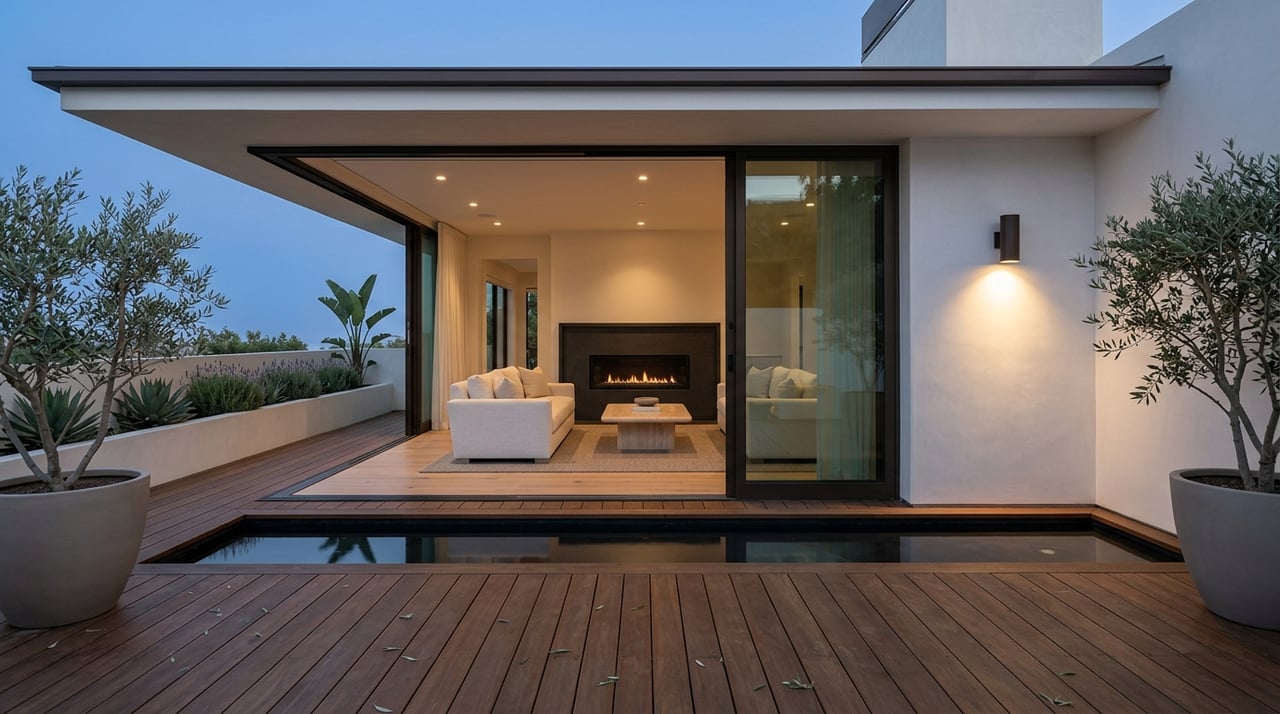
If you are selling in the Hollywood Hills, you are not just presenting rooms. You are presenting light, glass, terraces, and the feeling of the city unfolding below you. That is why staging here needs to work in two modes, daytime clarity and nighttime atmosphere. When you understand how to prepare your home for both, you can create a listing that feels more complete, more intentional, and more compelling. Let’s dive in.
Why day-to-night staging matters
Hollywood Hills homes often turn inward toward views rather than outward toward the street. In hillside settings, that orientation makes the interior experience, the sightlines, and the relationship to the outdoors especially important.
That matters even more in a market shaped by Modernist and post-and-beam design. Los Angeles planning materials note that these homes often feature large expanses of glass, open floor plans, and strong indoor-outdoor connections. In practical terms, your staging should support the architecture instead of competing with it.
There is also a clear marketing reason to take staging seriously. According to the National Association of Realtors 2025 Profile of Home Staging, 83% of buyers’ agents said staging made it easier for buyers to visualize a property as their future home. The same report found that some sellers’ agents saw offered value increase and time on market decrease.
Views should lead the story
In the Hollywood Hills, the view is usually the headline. Your staging should help a buyer notice the outlook first, then the architecture, then the furnishings.
That often means using a lighter furniture plan and resisting the urge to fill every corner. Large decorative pieces in the foreground can interrupt sightlines and make a room feel smaller on camera. A more restrained setup allows the eye to move naturally from one room to the next and out toward the view.
This approach also fits the character of many hillside homes. The city’s Hollywood planning guidance emphasizes preserving views, natural character, and topography. For sellers, that translates into an important staging principle: frame the setting, do not crowd it.
Daytime staging priorities
Daytime media helps buyers understand layout, scale, and how the home lives. In a glass-heavy Hollywood Hills property, that is when your architecture and room-to-room flow need to read clearly.
Zillow’s photography guidance recommends opening blinds and windows, avoiding shots directly into bright windows, and removing window screens when views are a key selling point. NAR also advises opening blinds, removing distracting objects, and trimming room contents so spaces appear larger on camera.
For your daytime stage, focus on simplicity and visual continuity.
Keep furniture visually light
Choose a layout that supports movement and preserves open space. In connected living, dining, and kitchen areas, bulky pieces can break up the flow that buyers want to see.
In many Hollywood Hills homes, leaving doors open between connected spaces helps the home feel expansive. This is especially effective in open-plan layouts where the architecture is part of the selling point.
Reduce glare and visual noise
Bright sun can flatten views and create harsh reflections on glass. A restrained material palette usually photographs better than a busy or highly decorative one.
Clean surfaces, simplify accessories, and make sure light fixtures are spotless. NAR’s photo guidance also supports using warm or bright-white bulbs that still read softly on camera.
Let the architecture do the work
If your home has dramatic glazing, a strong roofline, steel details, or clean post-and-beam geometry, staging should highlight those features. That does not mean making the space feel cold. It means editing it enough that buyers can actually see what makes the home special.
This is where thoughtful presentation can create a real edge. A design-forward plan can make the glass, the slope, and the horizon feel uninterrupted.
Twilight staging tells the second story
A Hollywood Hills home can feel completely different after sunset. During the day, buyers notice layout and view lines. At twilight, they notice mood, glow, and the relationship between the lit interior and the city beyond.
That is why twilight media is often so powerful in this submarket. Zillow’s luxury photography guidance says twilight capture is part of the expected luxury package and notes that the ideal effect comes from soft, diffused light during a short shooting window.
For many hillside homes, dusk is when the property’s identity becomes memorable. A well-lit living room opening to a terrace can tell a stronger emotional story than a daytime image alone.
Prepare lighting before the shoot
Before dusk photography begins, all interior lights should already be on. Every bulb should be working and consistent in color.
That consistency matters more than many sellers realize. Mixed color temperatures can make one room look polished and the next look off-balance. NAR recommends warm or bright-white bulbs that brighten rooms without making them feel harsh.
Highlight the indoor-outdoor connection
In twilight images, terraces, decks, balconies, and poolside spaces often become key visual moments. The goal is to show how the house glows against the evening backdrop, not just how the exterior looks from the street.
This is especially relevant in the Hollywood Hills, where lot shape, elevation, and terrace systems often help define value. If aerial media is part of the listing package, it can also help buyers understand how the home sits on the site and relates to canyon or basin views.
What to stage first
Not every room deserves the same budget or attention. The NAR staging data suggests the most valuable spaces to prioritize are the living room, primary bedroom, dining room, kitchen, and outdoor areas.
For most Hollywood Hills sellers, that means your first investment should go into the spaces that carry the listing visually and emotionally. Secondary bedrooms and less important flex spaces should still be neat and presentable, but they usually do not need the same level of styling.
Top spaces to prioritize
- Living room: Often the main view-facing space and one of the most important listing images
- Primary bedroom: Helps buyers connect with the home as a lifestyle purchase
- Dining area: Supports the sense of flow in open-plan layouts
- Kitchen: Reinforces design quality and everyday livability
- Outdoor terrace or deck: Often essential in a hillside property
When these spaces are staged with discipline, your photo set becomes stronger and more coherent from the first image onward.
A smart listing photo sequence
In a visual market like the Hollywood Hills, staging and photography need to work together. More than 90% of buyers search online, and 85% say photos are the most important factor in deciding which homes to view.
That means your listing should not just have strong images. It should tell a clear story from image to image.
A strong sequence often looks like this:
- The best view-facing living area
- The primary suite
- The kitchen
- The terrace, deck, or outdoor entertaining space
- A twilight exterior or interior-exterior shot if the home shows well after dark
This order helps buyers understand both the physical layout and the emotional appeal of the property.
Is virtual staging enough?
In most cases, no. Virtual staging can be useful as a supplement, but in a design-driven hillside market, it is usually not the full answer.
NAR’s 2025 data still points to strong value in physical staging. In a home where architecture, materials, views, and lighting all need to work together, buyers benefit from seeing a space that feels believable and cohesive in person and in photos.
For higher-end Hollywood Hills listings, physical staging often provides the foundation. Digital enhancements may support the marketing package, but they rarely replace the impact of a well-executed real-world presentation.
The Hollywood Hills advantage is precision
The best staging in the Hollywood Hills is rarely excessive. It is edited, architectural, and highly aware of how the home performs from morning light through dusk.
That is where a strategic seller advantage often comes from. When your presentation is tailored to the property, buyers are more likely to understand the value quickly and respond to the home as a complete experience.
Marc Robinson’s background in architecture and creative direction supports this kind of disciplined, design-led presentation. For sellers in the Hollywood Hills, that can mean a more intentional visual strategy, a stronger market debut, and a better framework for value-driven negotiation.
If you are preparing to sell and want a staging and marketing plan built around how your home actually lives and photographs, schedule a confidential consultation with Marc Robinson.
FAQs
Should a Hollywood Hills home be staged for daytime photos or twilight photos?
- Ideally both. Daytime images show layout, glass, and views clearly, while twilight images show ambiance, lighting, and the home’s relationship to the city lights.
Which rooms matter most when staging a Hollywood Hills home for sale?
- The highest-priority spaces are usually the living room, primary bedroom, dining room, kitchen, and outdoor areas, based on 2025 NAR staging data.
Why is staging especially important for Hollywood Hills homes?
- Many Hollywood Hills homes are view-oriented, glass-heavy, and open in plan, so staging helps buyers focus on sightlines, architecture, and indoor-outdoor flow rather than distractions.
Is virtual staging enough for a Hollywood Hills luxury listing?
- Usually not by itself. Physical staging still offers strong value, and virtual staging is typically better used as a supplement rather than a replacement.
What should come first in a Hollywood Hills listing photo sequence?
- Start with the strongest view-facing living space, then the primary suite, kitchen, outdoor terrace or deck, and a twilight image if the property shows well after dark.