If you are looking at a development parcel in Pacific Palisades, the land itself is only part of the story. In this market, a site can look promising on paper and still become far more complex once slope, overlays, coastal review, and access issues come into focus. This guide will help you evaluate Pacific Palisades parcels more clearly, so you can spot real opportunity, avoid expensive assumptions, and underwrite with more confidence. Let’s dive in.
Start With the Planning Framework
Pacific Palisades falls within the Brentwood-Pacific Palisades Community Plan, a large planning area that is described as mountainous, primarily residential, and about 55 percent open space. That context matters because the plan emphasizes preserving natural topography, protecting scenic views and corridors, minimizing grading, and restricting construction in geologically sensitive areas.
For you as a buyer, investor, or small developer, that means parcel evaluation in Pacific Palisades should begin with physical constraints and planning controls, not just lot size or asking price. A site with strong views or a desirable location may still face meaningful design and entitlement limits.
Use ZIMAS Before You Price the Deal
At the parcel level, the City points users to ZIMAS zoning and property research for address-based or APN-based due diligence. Pacific Palisades remains under Los Angeles’ Original Zoning Code, so base zoning, overlays, specific plans, and permit history remain central to feasibility.
You should also review the city’s Palisades Rebuild and Recovery Map through the same planning resources because it layers zoning, coastal zone boundaries, fire damage, and specific-plan areas in one place. That gives you a faster first-pass read on whether the parcel may require extra investigation before you spend real time on design or budgeting.
Check Specific Plans and Overlays Early
In Pacific Palisades, overlays can change what looks feasible at first glance. If a parcel sits in or near a commercial area, the Pacific Palisades Commercial Village and Neighborhood Specific Plan may set the key development limits.
According to the city summary, projects in the specific-plan area are generally capped at two stories or 30 feet, with up to 34 feet allowed for certain architectural roof features in one subarea. The plan also limits floor area ratio in Commercial Village areas to 1.5:1, with a mixed-use allowance up to 2:1, while some neighborhood areas have lower FAR caps.
If you are underwriting mixed-use or commercial frontage, the plan can also require ground-floor retail to occupy at least 75 percent of street frontage on applicable blocks. In practical terms, that means your exit strategy needs to align with the parcel’s exact subarea rules, not just broad zoning assumptions.
Understand Mulholland Review Risk
Some Pacific Palisades parcels can also be affected by the Mulholland Scenic Parkway Specific Plan. This is especially important for ridge parcels or lots visible from Mulholland Drive.
The city’s general guidance says projects adding more than 900 square feet, counted cumulatively since plan adoption, must go to the Design Review Board for recommendation. The plan also includes viewshed and height rules for buildings visible from Mulholland Drive, which can affect how much of your program is truly buildable in a practical sense.
That does not automatically kill a project, but it can affect timeline, design flexibility, and approval risk. If a parcel appears to have view-driven upside, you should test that upside against possible scenic overlay friction before assuming a premium finished value.
Hillside Standards Can Change the Math
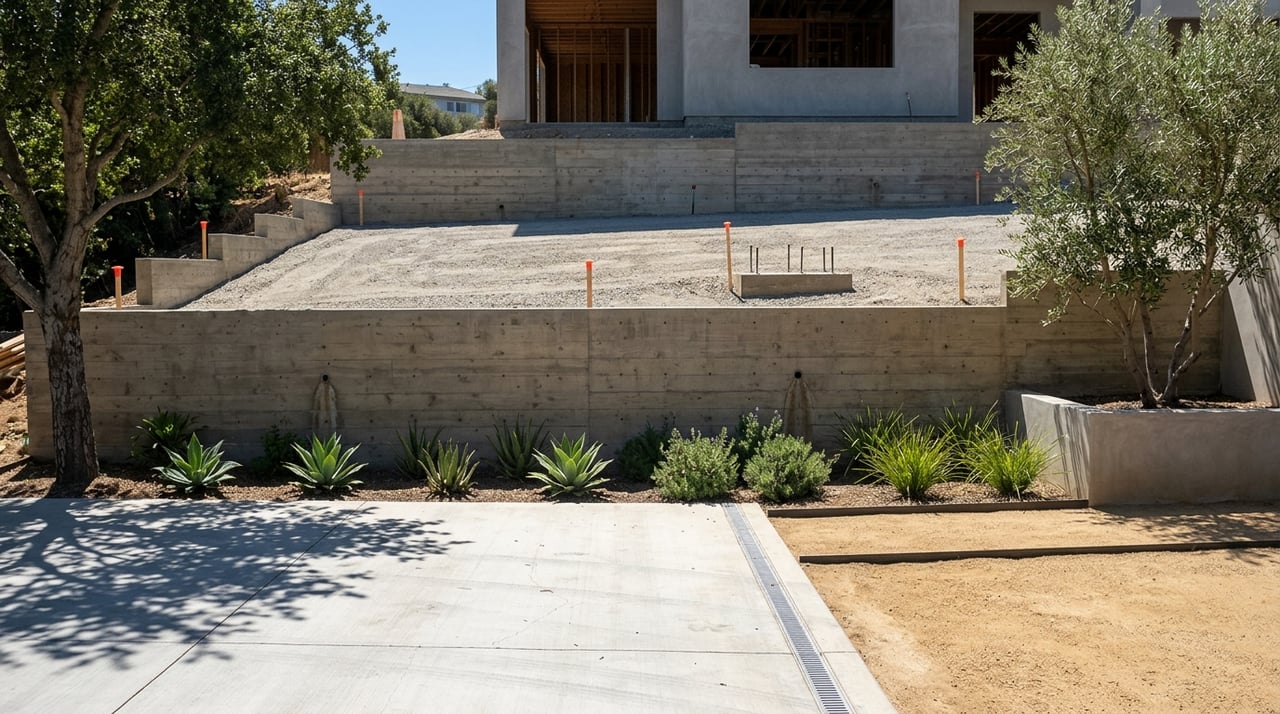
Many Pacific Palisades parcels are hillside parcels, and hillside rules can directly affect site yield. The city’s single-family hillside development standards checklist outlines added standards for roadway width, street dedication, setbacks, grading, parking, and lot coverage.
Two items often matter quickly in underwriting. First, lot coverage is capped at 40 percent for structures extending more than 6 feet above natural grade. Second, grading is limited to a base 1,000 cubic yards plus 10 percent of lot size, subject to by-zone maximums.
Those rules can materially affect your building envelope, retaining strategy, site work cost, and even floor plan efficiency. A parcel that seems large enough for an ambitious program may not support that program once natural grade and grading limits are analyzed.
Put Slope and Geology at the Center
In Pacific Palisades, topography is not a box to check later. It is one of the first filters you should apply.
The community plan calls for limiting some hillside development above 15 percent slope and for restricting building in geologically sensitive areas. That policy direction aligns with what the permit process often requires, especially in hillside conditions where grading and structural design become more complex.
LADBS inspection and permitting guidance states that soils and geology reports are usually required before grading or building permits. Those reports address issues such as slope instability, earthquake-induced landslides, liquefaction, and related hazards.
For especially steep hillside work, LADBS also notes that a geotechnical investigation report is required for grading activity on 100 percent slope. The big takeaway is simple: if you are not budgeting for geotechnical review early, you may not be pricing the parcel correctly.
Coastal Parcels Need a Different Lens
Some Pacific Palisades lots need to be evaluated through a coastal-review lens as well as a zoning lens. The community plan states that development in coastal areas should protect ocean and scenic coastal views, minimize alteration of natural landforms, and remain visually compatible with surrounding areas.
It also states that coastal development permits are required for new development in the coastal zone. Because of that, a coastal parcel may involve an added review track that affects timing, design strategy, and risk tolerance.
If a lot appears attractive because of proximity to the coast or view orientation, you should verify the permit path before you underwrite the opportunity aggressively. In this part of the market, coastal appeal can support value, but it can also add friction that needs to be reflected in your acquisition basis.
Separate Lot Value From Finished-Home Value
Pacific Palisades remains a high-price market, but that does not mean every parcel supports every build. According to Redfin’s Pacific Palisades housing market data, the median sale price in February 2026 was $3.499 million, with 80 days on market, a 95.3 percent sale-to-list ratio, and 14.8 percent of homes selling above list.
That pricing is higher than nearby comparison markets noted in the same report, including Brentwood at $2.65 million median sale price and Hollywood Hills at $1.7205 million. The implication is that Pacific Palisades can support higher-end new construction if the parcel justifies the cost and complexity of design controls, access constraints, and view-sensitive development.
Still, a premium resale environment does not remove execution risk. The buyer pool is narrower at the top of the market, and overbuilding or forcing an awkward design onto a constrained site can weaken the final result.
Read Recent Lot Sales Carefully
Recent land comps in Pacific Palisades need extra scrutiny. The lot market has been affected by post-fire recovery, which can distort what recent sales actually mean.
Redfin reported that investors bought roughly 2 in 5 vacant lots sold in the Pacific Palisades, Altadena, and Malibu fire-impacted areas in the third quarter of 2025. For you, that means recent lot transactions may reflect a mix of distressed pricing, speculative buying, and rebuild-driven demand rather than a stable land market.
This is why it helps to separate land comps from finished-home comps during underwriting. A parcel’s purchase price should be tested against its true entitlement path and construction profile, not just against headline resale values for completed homes.
Compare Pacific Palisades With Nearby Alternatives
If you evaluate development opportunities across Westside and hillside Los Angeles, Pacific Palisades stands apart in a few ways. Compared with Brentwood, it often carries more coastal-review friction. Compared with Hollywood Hills, it shares some of the same hillside and Mulholland logic, but generally at a higher price point.
That combination can create strong upside for the right project, but it also leaves less room for error. In other words, Pacific Palisades usually rewards disciplined site selection more than broad optimism.
A Practical Parcel Review Checklist
Before you move forward on a Pacific Palisades parcel, make sure you can answer these questions clearly:
- What is the exact base zoning?
- Does the parcel fall under a specific plan or overlay?
- Is it in the coastal zone?
- Is the site visible from Mulholland Drive or affected by scenic review?
- What are the slope conditions and likely grading limits?
- Will geology or soils issues increase cost or reduce buildable area?
- Are access, roadway width, or street dedication issues likely?
- Should recent lot sales be treated as distressed, speculative, or rebuild-driven comps?
- Does the likely finished product align with current Pacific Palisades resale demand?
If even two or three of those answers are unclear, the parcel may still be viable, but it should not be priced like a straightforward development site.
Why Discipline Matters Most Here
In Pacific Palisades, the difference between a strong land acquisition and an expensive lesson often comes down to underwriting discipline. The best parcels are not always the ones with the most dramatic marketing story. They are the ones where zoning, topography, access, review risk, and end-value all fit together in a logical way.
That is where experienced local analysis matters. If you are evaluating a land purchase, a rebuild opportunity, or a design-forward development play in Pacific Palisades, working with an advisor who understands both value and physical-site realities can save you time and protect your downside. If you want a strategic second opinion on a parcel, schedule a confidential consultation with Marc Robinson.
FAQs
What should you review first when evaluating a Pacific Palisades development parcel?
- Start with zoning, overlays, specific plans, slope conditions, and whether the parcel may fall within the coastal zone or scenic-review areas.
How do hillside rules affect Pacific Palisades parcel feasibility?
- Hillside rules can limit lot coverage, grading volume, parking layout, setbacks, and access, which can reduce your practical building envelope.
Why is geology important for Pacific Palisades land deals?
- Soils and geology reports are usually required before grading or building permits, and they can reveal slope instability, landslide risk, liquefaction concerns, and other cost-driving issues.
What does the Pacific Palisades Commercial Village Specific Plan control?
- It can regulate height, FAR, mixed-use allowances, and ground-floor retail frontage requirements for designated commercial village and neighborhood areas.
Why should you separate lot comps from home comps in Pacific Palisades?
- Recent lot sales may reflect post-fire recovery, investor activity, and rebuild dynamics, so they may not track the value of completed homes in a normal market.
Is Pacific Palisades more complex than Brentwood or Hollywood Hills for development parcels?
- In many cases, yes. Pacific Palisades can combine hillside constraints with coastal-review issues and scenic protections, often at a higher acquisition basis than nearby alternatives.