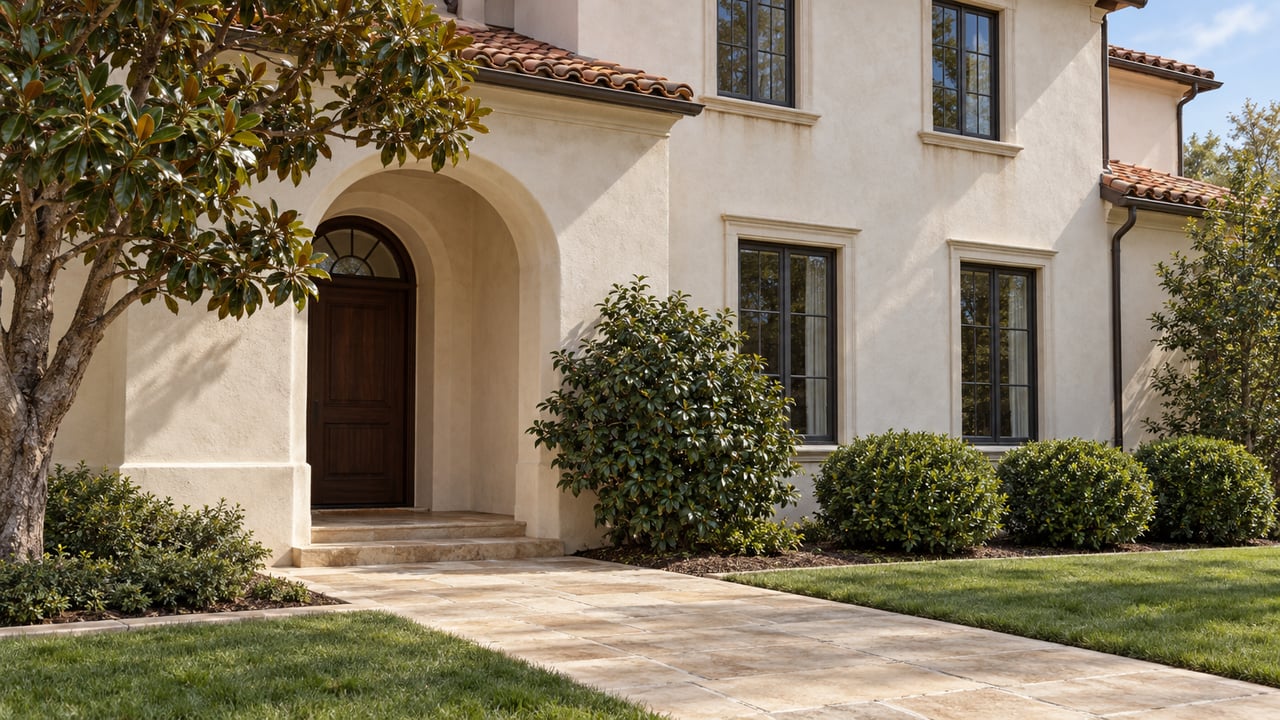
In March, a house of about 4,000 square feet at 1205 Las Lomas Place came to market at $7.5 million. The Real Deal described it as the first rebuilt home in Pacific Palisades to list. The asking price works out to about $1,875 per finished square foot. Across the Palisades during the same months, burned lots were selling for around $270 per square foot of land, according to market figures published in the Palisadian-Post.
Some of that gap is the cost of materials and labor. Much of the rest is the cost of time. Nearly two years after the fire, 90272 works as several markets, and the one moving fastest is the market for skipping the wait. If you are choosing between buying land, buying a house that is already standing, or holding off, the most useful number to know is how many months each option costs you.
The Land Price Settled Before the Houses Arrived
Lot values have stayed in a narrow band for about a year. MLS and public-records figures published in the Palisadian-Post in October put recent sales at an average of about $270 per land square foot. That is close to the roughly $278 average for the 147 lots that sold in the third quarter of 2025 and the roughly $258 average for the 131 that sold in the fourth quarter. The median lot sale has recently been about $1.8 million. Individual sales range from about $50 to more than $500 per square foot, depending on views, location and the lot itself.
The flood of lots many people expected after the fire never came. In April 2025, about 116 lots were for sale and about five sold each month, which at that pace was close to two years of supply. As of October 2026, about 150 lots were available and about 32 were selling per month. That is roughly five months of inventory, close to the three to five months the whole residential market typically ran between 2015 and 2024. Lot values still sit 30% to 50% below prefire levels, depending on location.
A stable land price means the cost of dirt is now predictable. The cost of everything above it is less so.
Finished Square Feet Cost About Seven Times as Much
The table below lines up the three kinds of property using the figures available. These are different measurements taken at different times, so read it as orders of magnitude rather than matched comparisons.
| What you are buying | Reference figure | Period |
|---|---|---|
| Burned lot | About $270 per land sq ft, median sale about $1.8M | Recent sales, as of October 2026 |
| First rebuilt home to list | About $1,875 per finished sq ft asking, 1205 Las Lomas Place | Listed March 2026 |
| Newer standing home, Marquez Knolls | Under about $2,011 per finished sq ft, 16680 Charmel Lane at $18.5M | Closed October 28, 2026 |
| Construction, quoted | About $650 to well above $1,000 per sq ft | Reports from December 2025 to March 2026 |
The construction figures vary widely. The Los Angeles Business Journal reported that Thomas James Homes guaranteed a firm price of $650 per square foot and a finished rebuild within one year or less of permit approval. The Real Deal reported in January that other rebuilding homeowners had been quoted well above $1,000 per square foot. The Los Angeles Times reported in March that architect Ardie Tavangarian's newly built Palisades home cost about $700 per square foot.
Here is a rough illustration, not an underwriting. A median $1.8 million lot plus a 4,000-square-foot house at $650 to $1,000 per square foot comes to about $4.4 million to $5.8 million in land and hard construction. That excludes design, permitting, financing and the months of carrying costs. Compared with a $7.5 million asking price for a finished home of the same size, the remaining difference covers those soft costs, the builder's risk, and the year or more the buyer does not have to wait.
The Clock Is the Expensive Part
The Pali Rebuild Map, a tracker published by the Palisadian-Post, counted 50 new homes completed with certificates of occupancy as of October 8. It also counted 1,862 building permit applications submitted, 1,317 permits issued, and construction underway on 1,126 primary structures. That works out to roughly one finished house for every 22 still underway.
Completions came in unevenly, with 10 in August and three in September. The tracker's creator, Kevin Pazirandeh, read that as the small-numbers effect rather than a bottleneck and noted that early October brought more completions than all of September. He also wrote that it is reasonable to expect about nine months from drywall to completion, because millwork, tile, cabinets, counters, appliances and finish trades all come after it. One hard-to-source product can stall a custom home in that phase.
That nine-month stretch starts after framing and drywall, not after closing on the lot. Anyone buying land this winter is buying a long wait. Anyone buying a standing house is paying to avoid it.
Turnkey Homes in the Middle Sell Faster Than Any Land
The midsummer numbers show where buyers are paying for time. In a price-tier breakdown the Palisadian-Post published in mid-August, land had about 4.4 months of supply and standing homes had about 6.1. Read alone, that makes land look like the stronger market. Broken out by price, the picture changes. Standing homes between $2 million and $5 million had 2.6 to 4.5 months of supply and a median of 15 days on market. The fastest land tier, $1.5 million to $2 million, took a median of 44 days.
A turnkey house in the low-to-mid millions sells about three times faster than the most liquid land. That is consistent with the rest of the evidence. The houses that sell quickest are the ones that remove years of waiting for a buyer who wants to be in the Palisades now.
Land sales in 2026 are concentrated at the low end, with about 82% of closed land sales between $1 million and $3 million as of August. The price ceiling for land is lower than for homes because a land buyer still has to add the full cost of building.
Above $10 Million, Every Market Is Slower
At the top, both land and homes slow down, and land slows sooner. As of August, lots above $5 million had 14 active listings against three sales all year. Homes held a reasonable pace to roughly $10 million. The $7 million to $10 million home tier was at 7.2 months of supply with a 54-day median, and the $15 million to $25 million tier carried more than 40 months of supply. No home above $25 million had sold in 2026 at that point, though five were listed.
The biggest recent sale shows how deals at the top are closing. 16680 Charmel Lane, a five-bedroom hillside house in Marquez Knolls completed in 2024, sold for $18.5 million on October 28. That set the record for the neighborhood, topping a $10.3 million sale at 1141 Maroney Lane in March. The Palisadian-Post reported that the house was first listed at $21.7 million in July. It closed about 15% below that first price after roughly three months. At this level, buyers will pay a record for a finished house with views and no construction ahead, but they set the terms.
New construction is starting to appear in staged form. In October, the Palisadian-Post reported that Alison White Homes had unveiled a newly built, 6,511-square-foot house at 837 Muskingum Avenue, staged with Serena & Lily and Annette Tatum Design. How finished homes like it are presented will matter as more of them reach the market and buyers can compare one against another.
The Number That Will Move Prices Next
The October market figures in the Palisadian-Post found that about 700 of the roughly 4,200 properties where homes were destroyed have changed hands. Permit applications cover about 1,850 properties, possibly including around 500 filed by owners who bought after the fire. That leaves about 2,200 original owners who, so far, have neither sold nor filed to rebuild. Another roughly 750 standing homes had fire, smoke or water damage, and some are likely to reach the market gradually at prices that reflect the remaining work.
For a land buyer, those 2,200 owners are the main supply risk. If even a fraction of them list, the stable $270 band gets tested. For a buyer of a finished home, the 50 completed houses and the damaged standing homes are the supply to watch. The more finished houses there are to compare, the closer their prices are likely to move toward land plus construction, and the smaller the premium for skipping the wait.
Quick Answers
Is it cheaper to buy a lot and build than to buy a finished Palisades home? On hard costs alone, often yes. The spread between a lot near $1.8 million and a finished home near $1,875 per square foot is wide. The difference narrows once you add design, permits, carrying costs and a build that, by the rebuild tracker's figures, still has about nine months to go after drywall.
Which part of the market is moving fastest? As of the August figures, standing homes between $2 million and $5 million, with a 15-day median time on market.
Where are the slowest sales? Lots above $5 million and homes above $15 million, where supply was measured in years rather than months.
You can read more about the area on our Pacific Palisades neighborhood page, and site-level questions are covered in our guide to evaluating development parcels in Pacific Palisades.
If you are deciding between a Palisades lot and a finished house, Marc Robinson can help you put a number on the months between them and build that into your offer. Schedule a confidential consultation.