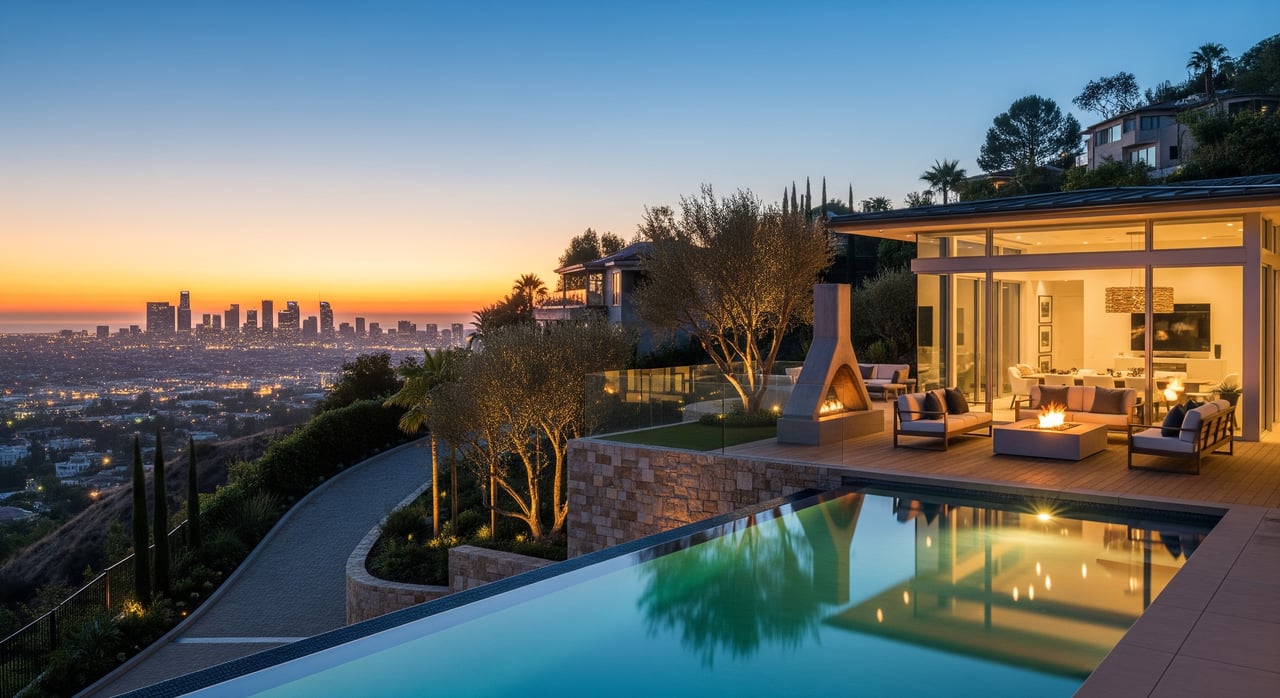
Think of the Hollywood Hills as many markets layered onto one map. If you are buying or selling here, the mix of ridges, canyons, views, and access can make pricing and timing feel opaque. This guide gives you a practical way to read a listing, select comps, and anticipate how topography and view corridors shape value and days on market. Let’s dive in.
Hollywood Hills is many markets
The Hollywood Hills is not one neighborhood. It is a patchwork of ridgelines, canyon bottoms, and named enclaves where street pattern, lot shape, and access differ block to block. Treat each canyon or ridge as its own micro-market with its own pricing logic.
Ridges vs canyons
- Ridgetop properties often deliver longer sight lines and sweeping views. They tend to carry a premium because of panorama and perceived status.
- Canyon-bottom homes trade more on privacy, mature trees, and sheltered microclimates. Views can be limited, which often translates to lower pricing compared with similar ridgetop homes.
View corridors matter
Not all views are equal. Buyers respond differently to city lights, canyon-only outlooks, Griffith Park or studio skylines, and downtown-to-ocean panoramas. A broad, unobstructed city-to-ocean or downtown sweep typically commands a substantial premium compared with otherwise similar homes with limited or no views.
Orientation and slope
South and west exposures often provide better light and sunset moments that elevate outdoor living. Steeper slopes can force multi-level floor plans and require engineering solutions like retaining walls. Flatter, usable pads are scarce and prized.
Access and commute patterns
Short, simple access with room for guest parking broadens the buyer pool. Steep driveways, tight private roads, or long cul-de-sacs can deter some buyers. Commute convenience varies by canyon and route. A home that feels “close” to studios or the Westside on a map can drive very different door-to-door times depending on which canyon road you use.
Market perception and naming
Familiar enclaves such as Outpost Estates, Beachwood Canyon, Laurel Canyon, Mount Olympus, Hollywoodland, Hollywood Dell, Franklin Hills, and Whitley Heights carry marketing weight. A recognizable street or enclave can add perception value, though the physical attributes still drive most outcomes.
How topography shapes price and speed
The same square footage can perform very differently depending on where it sits on the hill, what it sees, and how you reach it. Here is what consistently moves price and days on market.
Price drivers to watch
- View premium: Broad, unobstructed city-to-ocean or downtown panoramas generally sell for more than similar homes with partial or no views. The premium is highly variable, so you should confirm with local paired sales.
- Ridge vs canyon: Ridgetops often command more for views and status. Canyons may sell for less but deliver privacy and a calmer feel many buyers love.
- Lot usability and build cost: Steep or unstable lots can drag value due to grading, retaining walls, or specialized foundations. Small flat areas with true outdoor living space can be disproportionately valuable.
- Access and parking: Clean approach, manageable driveway grade, and 2 to 3 covered spaces are meaningful in the Hills. Challenging access reduces the buyer pool.
- Orientation: South and west exposures support indoor-outdoor living and can attract stronger demand.
DOM patterns you can expect
- Faster sales: Turnkey homes with strong views, quality curb appeal, clear access, and solid parking often move quickly at mid-to-high price points where demand exceeds supply.
- Slower sales: Highly customized architecture, fractured floor plates, access or permitting uncertainty, or known hillside remediation can extend market time. At ultra-high prices, the buyer pool narrows, so unique features can lengthen marketing time.
- Seasonality: Spring and early fall often feel stronger, but different canyons present differently by season. Foliage-heavy settings can look their best at specific times of year.
- Price elasticity: In scarce micro-markets, rare combinations of view, lot, and plan can justify aggressive pricing with short DOM. Overpricing a hilltop view home with access issues usually prolongs the listing.
A simple framework to read a listing
Use this field-tested approach to size up a Hollywood Hills property and build reliable comps.
Step A: First-pass classification
- Identify the micro-market: canyon, ridge, or named enclave.
- Note elevation and orientation: ridge, top-of-slope, mid-slope, or canyon bottom, and whether the exposure is south, west, north, or east.
- Log the view: canyon-only, partial city, full city-to-ocean, hillside-only, landmark or skyline, or no view.
- Check access: public or private street, gated or not, driveway grade, and number of parking spaces or garage bays.
- Evaluate lot usability: flat or terraced areas versus steep slopes that rely on retaining walls.
- Assess condition: turnkey or likely need for seismic, retaining wall, or major systems work.
- Flag risks: steep slopes, past slide areas, brush clearance requirements, and high fire hazard zones.
Step B: Selecting comps
- Start with the same canyon and ridge line. If none exist, use a parallel canyon with similar orientation and exposure.
- Match view first. A home with true city-to-ocean views does not compare well to one with valley-only exposure.
- Match access conditions: private roads versus standard public streets, driveway grade, and similar parking.
- Match usable lot area and outdoor living features like pools and terraces.
- Match era and condition. Adjust for remodel level versus original condition.
- Time window: use the most recent 6 to 12 months where the market is active. Widen carefully in slower pockets.
- When inventory is sparse, use a paired-sales approach to infer premiums for specific differences such as view or parking.
Step C: Adjustments to consider
- View: Translate qualitative differences into careful percentage or dollar adjustments using local pairs when possible.
- Lot geometry and build cost: Estimate remediation or construction cost gaps. Buyers discount for expected out-of-pocket risk.
- Parking: In the Hills, 2 to 3 covered spaces can be a material differentiator.
- Privacy and gating: Visual separation and gates can justify a premium.
- Entitlements and permits: Approved ADUs or permitted addition plans add value. Unpermitted work reduces value and adds uncertainty.
Step D: Presenting comps clearly
When you share comps with a buyer or seller, label each comp’s canyon or ridge and view type next to the address. Seeing the micro-market and view context at a glance helps everyone understand why each sale is truly comparable.
Regulatory, risk, and cost factors
Hillside ownership comes with unique rules and risks. Understanding them early helps you price and negotiate with confidence.
Permitting and hillside rules
Expect hillside-specific reviews for grading and structure. Projects often require soils or geotechnical reports and a grading plan. Parcels near scenic corridors or along Mulholland may be subject to design guidelines that limit massing and visible grading. Retaining walls usually require permits, engineering, and inspections that affect cost and timeline.
Fire, insurance, and access
Large portions of the Hills sit in high or very high fire hazard severity zones. This can influence insurance availability and premiums, defensible space requirements, vegetation management, and building material choices such as ember-resistant vents. Narrow or steep roads can affect emergency response and underwriting, which some buyers weigh in their decision.
Geotechnical issues
Past slide areas, undocumented fills, or older foundations may require remediation or seismic upgrades. Drainage and stormwater management are critical to protect the home and downhill properties. Plan for due diligence that includes permit history, professional inspections, and, when needed, geotechnical review.
Utilities and services
Steep parcels can constrain sewer laterals, ADU placement, and stormwater capture. Utility upgrades may cost more than in flatter neighborhoods. Some private roads limit municipal services like large-truck access, which is an everyday convenience factor for some buyers.
Smart research workflow
Use a disciplined process to reduce surprises and improve your pricing accuracy.
- Pull the MLS listing plus the most recent 3 to 5 closed comps in the same canyon or ridge with matching view type.
- Check public records to confirm lot size, legal description, transfer history, and recorded permits or liens.
- Review the City’s building and safety permit history and any code enforcement records.
- Run fire and landslide hazard overlays for risk flags.
- Use satellite and topo tools to confirm view corridors, driveway grade, and ridgeline proximity.
- Order or review geotechnical history if risks appear. Estimate costs for grading or retaining walls where needed.
- When direct comps are scarce, build paired sales to isolate the value of specific features like view, access, or parking.
Putting it together: quick scenarios
- Ridgetop with sweeping city-to-ocean views: Strong view plus clean access often translates to faster sales and firmer pricing. Confirm the view premium with local pairs before setting list price.
- Canyon-bottom with privacy and tree canopy: Lower baseline price compared with a similar ridgetop home, but high appeal for buyers who value quiet and greenery. Photos and on-site feel matter.
- Architectural one-off with challenging driveway: Unique design can lift perceived value, but long or steep access may shrink the buyer pool and extend DOM. Pricing should account for both the design narrative and the access reality.
- Remodeled home on a steep lot with limited outdoor space: Inside may be turnkey, but the lack of usable pads can cap value. Highlight any terraces or pool decks to show how outdoor living still works.
Ready to buy or sell with clarity
If you want to maximize results in the Hills, anchor your decisions in micro-market context, view type, and access realities. Pair that with disciplined due diligence on permits, fire zones, and geotechnical conditions, and you will negotiate from strength. For a tailored plan, connect with a local advisor who blends design-sensitive presentation with tactical negotiation. Reach out to Marc Robinson to explore your next move.
FAQs
How much is a Hollywood Hills view worth?
- It varies widely and depends on how broad and unobstructed the view is; use local paired sales in the same canyon or ridge to estimate a realistic premium.
Is a steep driveway a deal breaker in the Hollywood Hills?
- It narrows the buyer pool and can affect price and days on market; assess everyday usability, guest parking, and emergency access before deciding.
Do named enclaves like Outpost Estates change value?
- Recognizable enclaves can add a marketing premium, but the property’s view, access, lot usability, and condition tend to drive most of the final price.
What should I check before making an offer on a hillside home?
- Verify permit history, fire hazard designations, geotechnical or drainage concerns, driveway grade and parking, and that the view and orientation match your goals.
How do I pick the right comps in the Hills?
- Start with the same canyon or ridge and match view type first, then align access, usable lot area, and condition; widen your radius only when necessary and adjust carefully.